Stages of Renewal
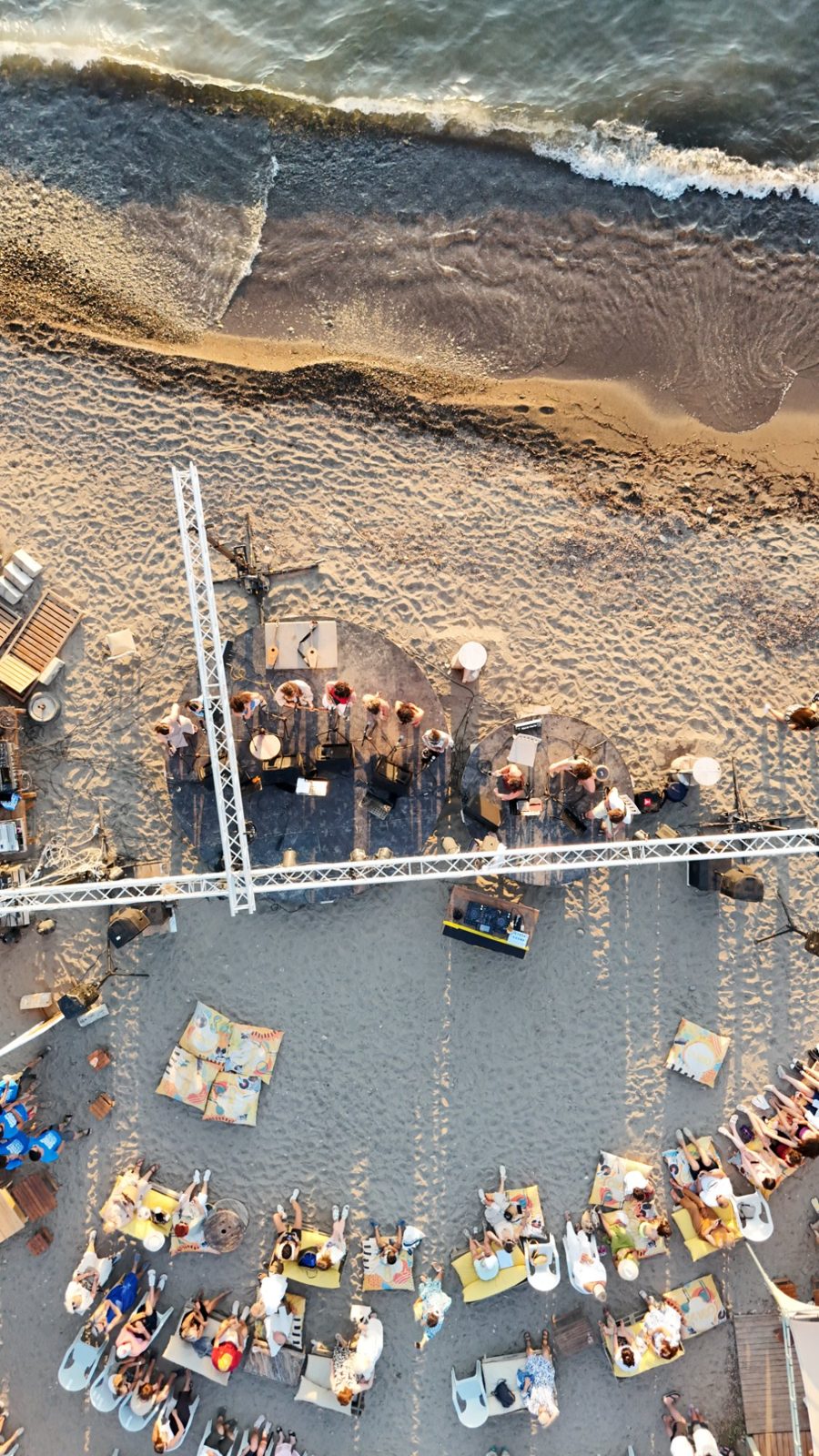
Stages of Renewal is an eco-cultural project the Festival has developed together with architect Tolga Koloğlu and Studio-Method. It creates sustainable cultural spaces through circular design and collective participation. Rather than following a drawn plan, the stage is designed around the reusable material collected in Bodrum over the winter.
The first stage was built at Suda in 2025, from material sourced with the help of more than 40 volunteers and donated by construction firms, shipyards and hotels. Over a 15-day residency, 9 participants, 8 of them women, built the stage by hand with 4 architects. The pilot phase was supported by the Embassy of France in Türkiye.
The stage is put up and taken down each year. When there are no concerts, it serves as a playground, a shaded area and a place to watch the sunset.
Stages of Renewal –
Taşta
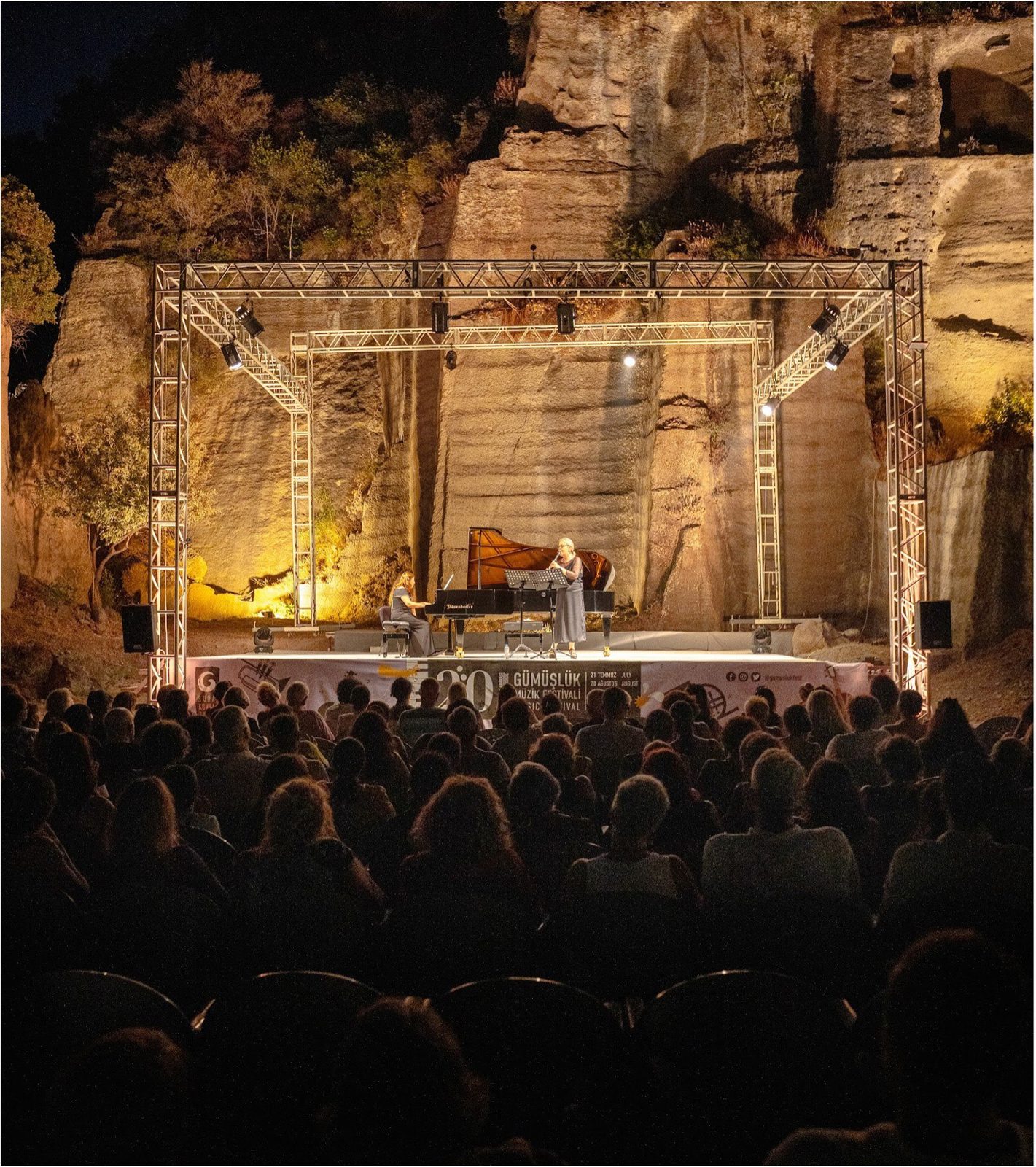
The Koyunbaba Ancient Quarry is a 2,500-year-old heritage site, where stone was cut for the Mausoleum of Halicarnassus. The quarry lay abandoned until 2012; since then it has been the Festival’s main stage.
The venue currently seats 400 and has no dressing rooms, storage or shade, so everything has to be taken down after each concert. As the quarry is a first-degree archaeological site, any new structure must also be fully demountable.
The new modular design combines stage, seating, dressing rooms and storage. It will raise capacity to 800, and a shade structure will make daytime rehearsals possible. The stage is planned for 2027.
The Taşta Gate
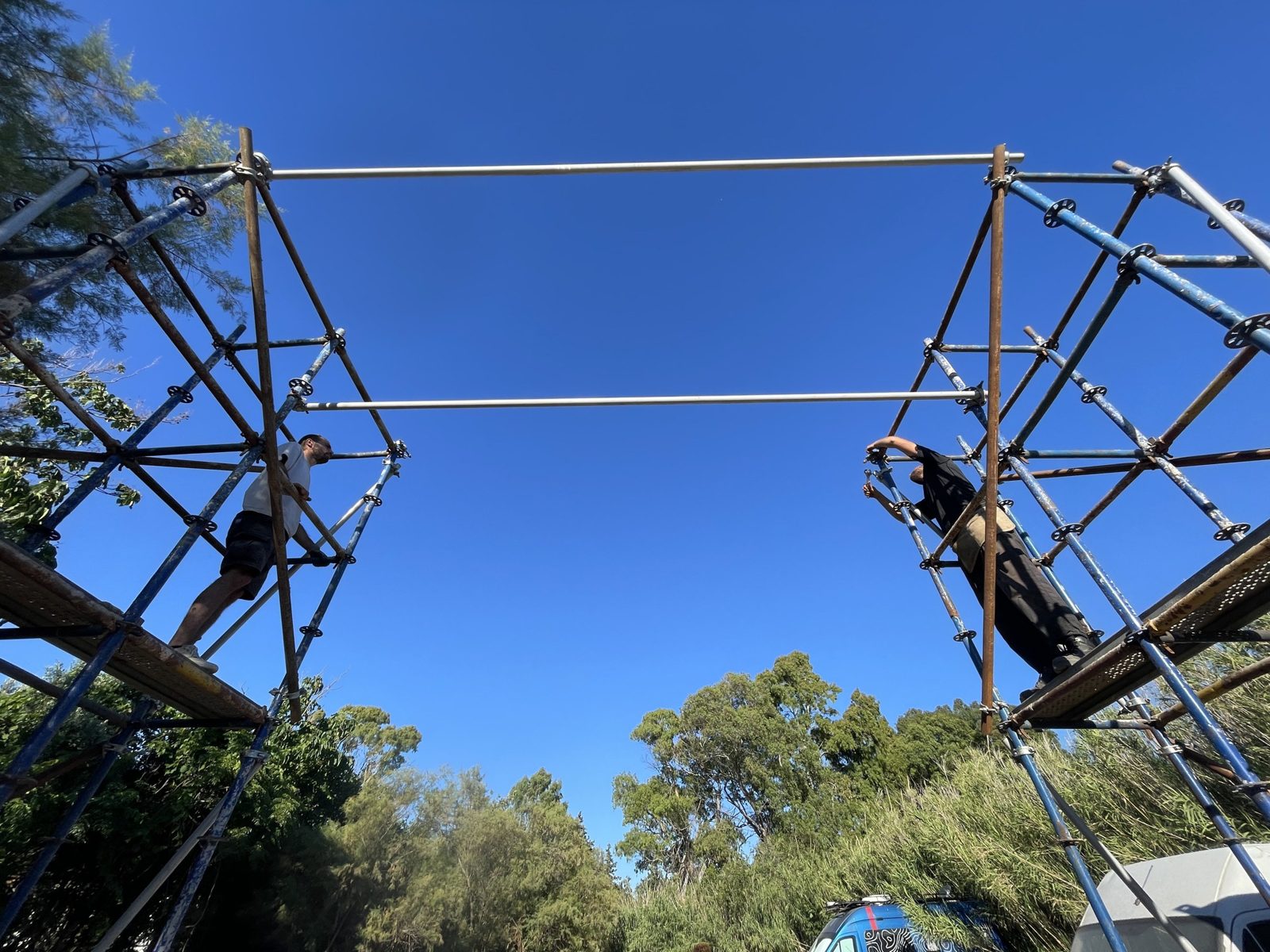
The quarry phase of Stages of Renewal will improve the stage, seating and service areas at the Koyunbaba Ancient Quarry. It began with a design-and-build workshop that designed and built a temporary gate for the quarry entrance. As work at the quarry has not started yet, the gate was put up at the Festival Centre for now, where it serves as the entrance to the festival grounds.
The workshop was led in June 2026 by Studio-Method of Rotterdam and Tolga Koloğlu, with architecture students and local participants. It used waste and salvaged parts collected locally, and participants took part in every stage, from sourcing the material to building the gate. The workshop was supported by the Embassy of the Kingdom of the Netherlands, the Consulate General of the Netherlands in Istanbul and the Stimuleringsfonds Creatieve Industrie.
Because the quarry is a first-degree archaeological site, the gate was built without fixings into the ground and can be taken down completely. It is a small-scale trial for the new stage planned for the quarry.
